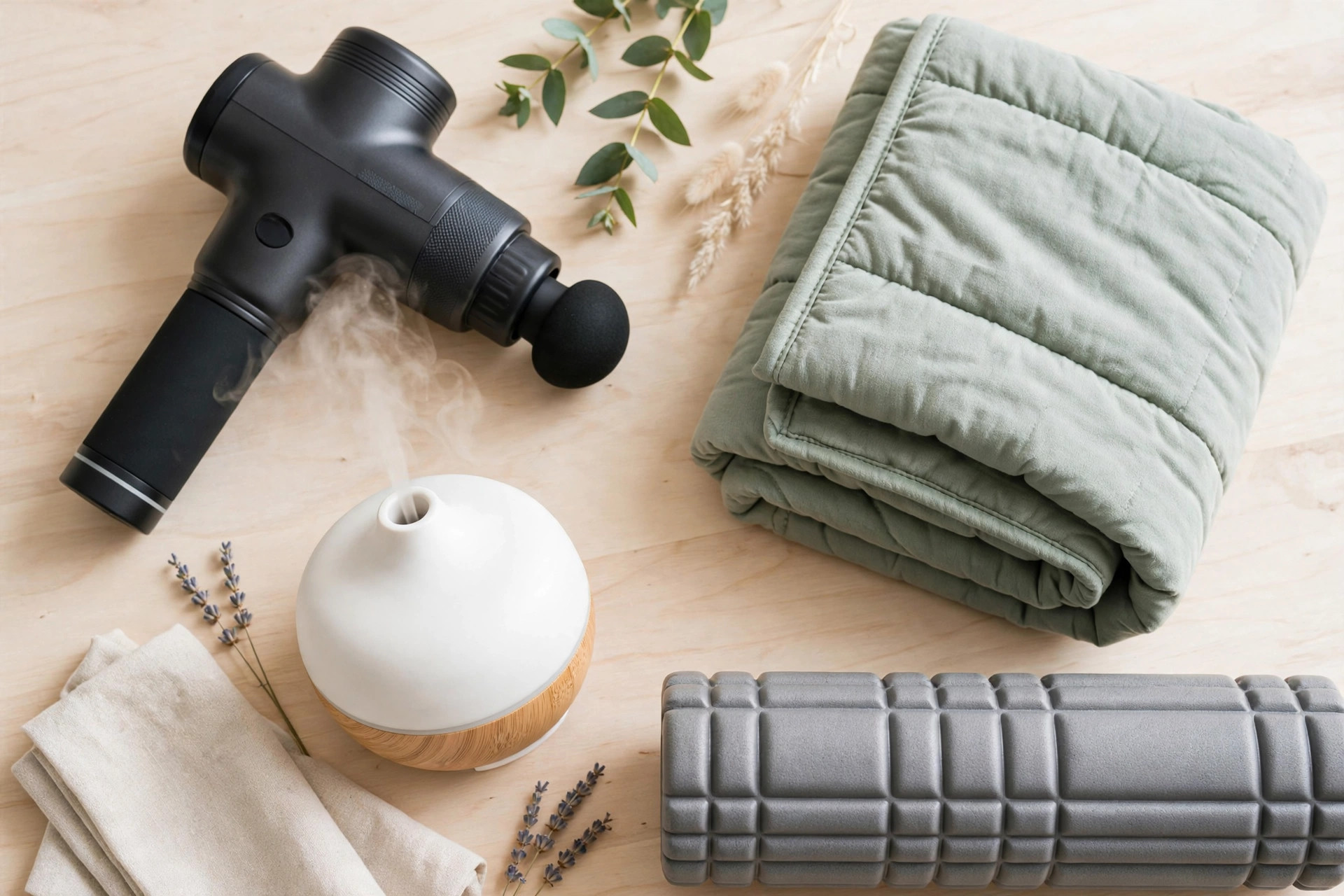
Small Home Health Gadgets That Are Actually Worth It
Walk down any health aisle — real or virtual — and you'll find a mountain of home health gadgets promising to fix your back, your sleep, your posture, and probably your personality. Most of them end up forgotten in a drawer. But a few genuinely earn their place in your home. We've put together an honest roundup of the useful health gadgets that are actually worth your money: simple, affordable tools that can make everyday aches and routines a little easier.
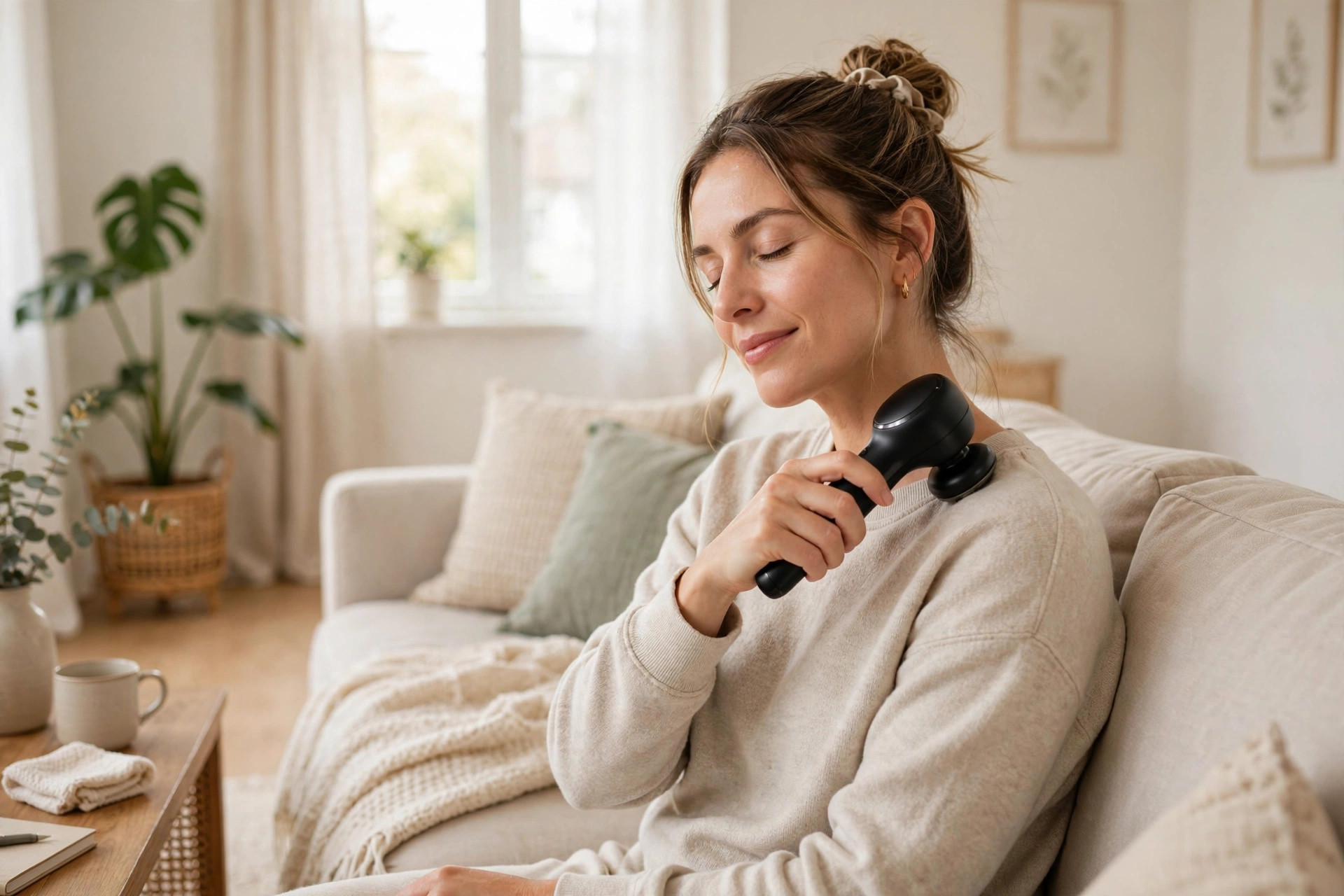
1. Handheld Massage Gun
What it is
A rechargeable device that delivers rapid pulses to your muscles — think of it as a deep-tissue massage you give yourself, on your own schedule.
What it helps with
Loosening tight shoulders, calves, and thighs after a long day at the desk or a workout. Many people use one for a few minutes in the evening to unwind stiff, overworked muscles.
Who it suits
Desk workers with knotted shoulders, anyone active who gets sore muscles, and people who prefer a firmer style of massage.
Its limits
It won't fix an injury or replace a physiotherapist. Start on the lowest setting, avoid bony areas and the front of your neck, keep sessions short, and skip it over anything swollen or freshly injured.
2. Massage Ball Set
What it is
Small, firm balls — smooth or spiky — that you roll under your feet or press between your back and a wall to work into tight spots.
What it helps with
Targeted pressure on knots in the back, glutes, and feet. A spiky ball rolled under the foot is a classic for tired, achy feet at the end of a long day.
Who it suits
Anyone who wants the cheapest effective self-massage tool there is. They cost very little, need no batteries or charging, and fit in a desk drawer.
Its limits
They're beautifully simple, which means they do one thing well and nothing else. For larger muscle groups like thighs and calves, pair them with a foam roller.
3. Heat Wrap
What it is
A wraparound pad — electric or microwavable — that delivers soothing warmth to the neck, shoulders, or lower back.
What it helps with
Relaxing tight, achy muscles and easing everyday stiffness. Warmth is one of the oldest comfort remedies there is, and plenty of people find a warm wrap in the evening genuinely melts the day away.
Who it suits
People with recurring muscle tension, anyone who seizes up in cold weather, and evening wind-down routines.
Its limits
Heat is for tightness and everyday aches, not fresh injuries or swelling — cold is the right call there. And if the same pain keeps coming back, get it checked rather than just heating it into submission.
4. Foam Roller
What it is
A firm cylinder you slowly roll your body weight over to work out tight muscles in the legs, back, and hips.
What it helps with
General muscle tightness, especially in the thighs, calves, and upper back. Runners and gym-goers swear by them, but desk workers with stiff hips and backs benefit just as much.
Who it suits
Active people and anyone willing to spend five minutes on the floor a few times a week.
Its limits
It can be uncomfortable at first — that's normal, but sharp pain isn't. Start with a softer roller and lighter pressure, and ease in gradually.
5. Lumbar Support Cushion
What it is
A shaped cushion that sits between your lower back and your chair, filling the natural gap your spine leaves when you sit.
What it helps with
Encouraging better sitting posture and reducing the slow slouch that leads to lower-back ache during long stretches of sitting.
Who it suits
Anyone who sits for hours — office workers, drivers, students, gamers.
Its limits
A cushion supports good posture; it doesn't create it on its own. Pair it with regular movement breaks, and you'll get far more out of it.
6. Essential Oil Diffuser
What it is
A small device that disperses a fine mist of water and essential oil into the air.
What it helps with
Creating a calmer atmosphere. Many people find scents like lavender help them wind down in the evening — it's as much about the ritual and the environment as the scent itself.
Who it suits
Anyone building a bedtime wind-down routine, or who simply likes their home to smell pleasant.
Its limits
Scents won't treat medical conditions, so keep expectations realistic. Also keep oils away from pets — some are unsafe for cats and dogs — and always use them as directed.
7. Wrist Support Wrap
What it is
A soft, compressive wrap or brace that supports the wrist during typing, lifting, or other repetitive tasks.
What it helps with
Taking strain off tired wrists and gently reminding you to keep them in a neutral position instead of bent back over a keyboard.
Who it suits
Heavy keyboard users, crafters, and anyone whose wrists ache after repetitive work.
Its limits
A support eases symptoms; it doesn't fix the underlying cause. If you have persistent numbness or tingling in your hands, see a professional — that needs proper assessment, not just a wrap.
How to Choose the Right Gadgets for You
Start with your actual problem, not the shiniest product. Sore shoulders after work? A massage gun or massage balls. Stiff lower back from sitting? A lumbar cushion plus a foam roller. Trouble winding down at night? A diffuser and a heat wrap for the evening routine.
A few practical tips before you buy:
- Buy for the routine you'll actually keep. The best gadget is the one you'll use three times a week, not the impressive one that lives in a cupboard.
- Start simple and cheap. Massage balls and a basic heat wrap cost little and tell you whether the approach works for you before you spend more.
- Check the basics. Look for straightforward controls, washable covers where relevant, and sensible safety features like auto shut-off on heated products.
- Add one thing at a time. Try a single gadget for a couple of weeks before buying the next. Your shelf — and your wallet — will thank you.
The Bottom Line
You don't need a house full of equipment to feel better day to day. A handful of small, well-chosen tools — something for tight muscles, something for posture, something for winding down — covers most of what everyday life throws at your body. Pick the one that matches your biggest annoyance, give it a fair two weeks, and build from there.
This article is for general information only and isn't medical advice. If you're dealing with persistent or severe symptoms, check in with a qualified health professional.
Browse our health appliances collection to find the tools mentioned here.
