Lower Back Pain from Sitting All Day? Causes and 7 Simple Fixes
If your lower back starts aching somewhere around mid-afternoon and only eases once you're up and moving around, you're dealing with one of the most common complaints of modern working life. Lower back pain from sitting rarely arrives with a bang — it builds quietly, day after day, until the ache becomes part of the furniture. The encouraging part: it usually responds well to small changes in how you sit, how often you move, and how strong the supporting muscles are. Here's what's going on, and the seven fixes that make the biggest difference.
Why Sitting Hurts Your Lower Back
It seems backwards — sitting feels like rest, so why does it leave your back sorer than being active? A few things happen at once. When you sit, especially slumped, the natural inward curve of your lower spine flattens or reverses, which loads the discs and ligaments unevenly. The muscles that normally hold you upright switch off and let the passive structures take the strain. Your hip flexors shorten in the seated position, and over time that tightness pulls on your pelvis and changes how your back carries load when you do stand up.
None of this means sitting is dangerous. Your back can handle sitting — just not the same unbroken position for eight or ten hours. For most people it's a dose problem, not a damage problem, and the dose is something you can change today.
1. Set Your Chair Up Properly
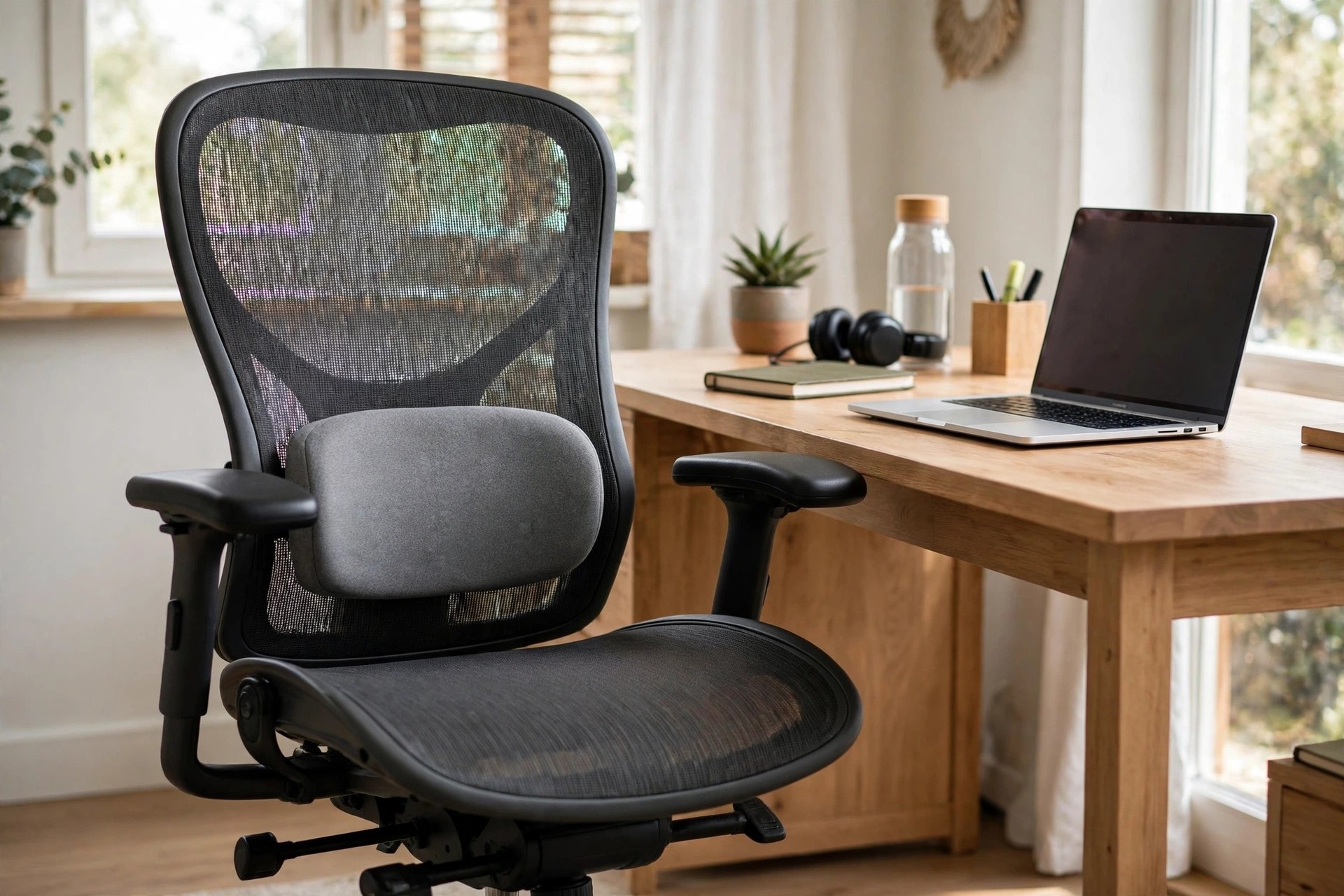
Start with the basics, because no cushion or brace can outwork a badly set chair. Your feet should rest flat on the floor (or on a footrest), with your knees at roughly a right angle and your thighs sloping very slightly downward. Your hips should sit at the back of the seat, so the chair's backrest can actually support you rather than leaving a gap you slump into.
Your screen matters too: too low, and you round forward to meet it. Eye level, and close enough that you're not leaning in, keeps the whole spine stacked more comfortably. Small adjustments, but everything else builds on them.
2. Support Your Lower Back's Natural Curve
Even in a good chair, there's usually a gap between the backrest and the curve of your lower back — and unsupported, that curve slowly collapses into a slump. A lumbar support cushion fills the gap so your spine can keep its natural shape with far less effort from you.
Position matters more than price: the cushion belongs in the small of your back, just above your belt line, not behind your tailbone. A back support brace can help similarly on days when your back feels tired. Treat both as supports for good habits, not substitutes for them — which brings us to the most important fix of all.
3. Move Every 30 to 60 Minutes
If you take only one thing from this article, take this: your back doesn't need a perfect position; it needs changing positions. Standing up every half hour or so — even for a minute — reverses the creep of tissues into a set shape, gets blood moving, and resets your posture.
Make it easy to remember: stand during phone calls, refill your water glass, walk to the printer instead of rolling to it. A quiet hourly timer works too. The break doesn't need to be exercise; it just needs to happen often.
4. Stretch Your Hips and Hamstrings
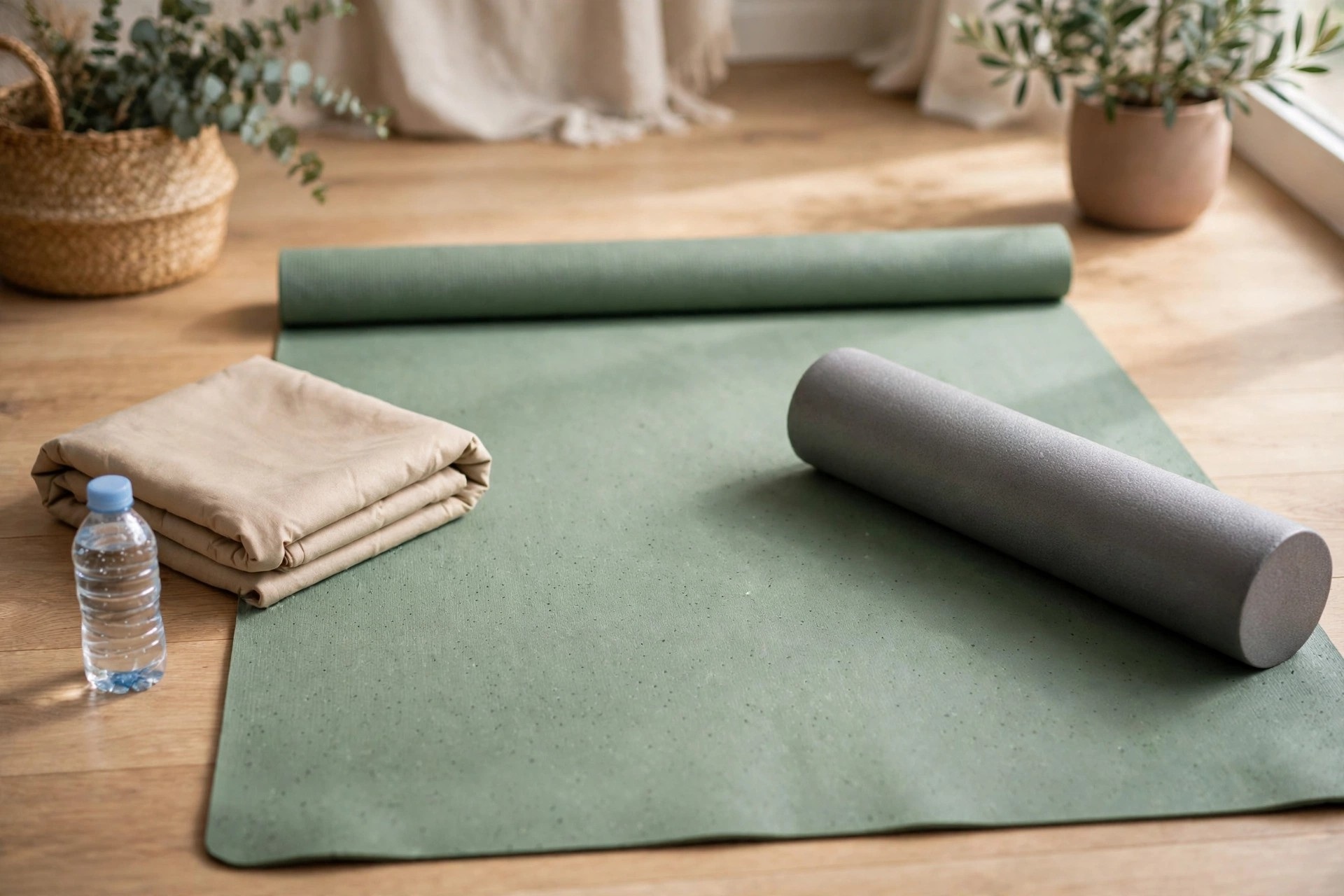
Tight hips and hamstrings are the hidden accomplices in a lot of sitting-related back pain. When they shorten, they limit how your pelvis moves, and your lower back ends up doing motion it wasn't meant to do alone. These three gentle stretches take about five minutes.
Seated figure-four stretch
Sit tall, cross one ankle over the opposite knee, and gently lean forward from the hips until you feel a stretch in the hip and glute of the crossed leg. Hold for 20–30 seconds, then swap sides.
Knee-to-chest stretch
Lying on your back, draw one knee gently toward your chest with both hands until you feel an easy stretch in your lower back and glute. Hold for 20–30 seconds, then swap. Keep the movement slow and never force the range.
Standing hamstring stretch
Rest one heel on a low step or the floor ahead of you with the leg straight, then hinge forward slightly from the hips until you feel a stretch down the back of the thigh. Hold for 20–30 seconds per side, keeping your back straight rather than rounded.
5. Strengthen Your Core and Glutes
Stretching loosens what's tight; strengthening fixes what's underworked. Your glutes are the engine of your lower body, and after years of sitting, they often need waking up. Two simple exercises cover most of the ground:
Glute bridges: Lying on your back with knees bent and feet flat, push through your heels to lift your hips until your body makes a straight line from shoulders to knees. Hold for a second or two, lower slowly, and repeat ten times.
Bird-dogs: On all fours, slide one arm forward and the opposite leg back until both are in line with your body, keeping your back flat and hips level. Hold for five seconds, then swap sides — five per side is a good start.
Aim for a few sessions a week. Stop if anything causes sharp pain — these are maintenance exercises for a healthy back, not treatment for an injured one.
6. Use Heat for Everyday Stiffness
For the familiar dull ache of a long sitting day, warmth is a simple comfort: it helps tight muscles relax and encourages blood flow to the area. Fifteen to twenty minutes with a heat wrap or heated pad across your lower back in the evening is a pleasant way to undo the day.
Keep the usual heat rules: lowest comfortable setting, never on a fresh injury or swollen area (cold is the right choice there), and don't fall asleep on a heated product unless it has an auto shut-off.
7. Walk Every Day
It sounds too simple, but walking is one of the best things you can do for a sitting-sore back: gentle, natural spinal motion that works the glutes and core and directly counteracts hours of stillness. A relaxed 20 to 30 minutes a day — a lunchtime lap of the block, an after-dinner stroll — makes a real difference over a few weeks.
When to See a Professional
Most sitting-related back pain settles within a few weeks of better habits. Get checked promptly if any of these apply: pain running down your leg below the knee, or numbness, tingling, or weakness in a leg or foot; pain after a fall or accident; back pain with fever, unexplained weight loss, or changes in bladder or bowel control; or pain that's severe, getting worse, or not improving after several weeks of self-care. Those need proper assessment, not another cushion.
The Bottom Line
Lower back pain from sitting is usually a habits problem, and habits can be changed. Set your chair up so it supports you, fill the gap behind your lower back, move every half hour or so, loosen your hips, strengthen your glutes, and walk daily. None of it is dramatic — but done consistently, it's how a mid-afternoon ache stops being part of the furniture.
Frequently Asked Questions
Why does sitting hurt my lower back more than standing?
When you sit — especially slumped — the natural curve of your lower spine flattens, loading discs and ligaments unevenly, while the muscles that hold you upright switch off. The problem usually isn't sitting itself, but sitting in one unbroken position for hours.
How often should I stand up if I sit all day?
Every 30 to 60 minutes, even if it's only for a minute. Stand during calls, refill your water, or walk a short loop. Changing position regularly matters more than finding one perfect position.
Do lumbar support cushions actually help?
They help many people by filling the gap between the chair and the natural curve of the lower back, so the spine keeps its shape with less effort. Position is key: the cushion belongs in the small of your back, just above your belt line. It's a support for good habits, not a replacement for moving regularly.
What is the best exercise for lower back pain from sitting?
Walking is the simplest and one of the most effective — 20 to 30 minutes a day. For targeted work, glute bridges and bird-dogs strengthen the muscles that support your spine, and gentle hip and hamstring stretches reverse the tightness sitting causes. Keep everything pain-free and build up gradually.
When should I worry about lower back pain?
See a professional promptly if you have pain travelling down your leg below the knee, numbness or weakness in a leg or foot, pain after an accident, bladder or bowel changes, fever or unexplained weight loss alongside the pain, or pain that's severe or not improving after several weeks of self-care.
This article is for general information only and isn't medical advice. If you're dealing with persistent or severe back pain, check in with a qualified health professional.
Browse our braces and supports collection for lumbar cushions, back supports, and more.
