Essential Oils for Beginners: What They Are and How to Use Them Safely
If you've ever caught a wave of lavender or eucalyptus drifting past and thought, "I'd love my home to smell like that," this essential oils for beginners guide is for you. Learning how to use essential oils safely is simpler than the internet makes it look — you don't need a chemistry degree or a shelf of fifty bottles. You need a handful of versatile oils, a couple of safe methods, and a few ground rules. Let's walk through all of it, so you can start with confidence rather than guesswork.
What essential oils actually are?
Essential oils are concentrated plant extracts — the aromatic compounds drawn from flowers, leaves, bark, or peel, usually by steam distillation or cold pressing. That little 10 ml bottle of lavender oil represents a surprising amount of plant material, which is why the scent is so intense and why a few drops go a long way.
One important distinction before anything else: "essential oil" and "fragrance oil" are not the same thing. Essential oils come from actual plants. Fragrance oils are usually synthetic blends manufactured to smell like something — fine for scenting a room if fragrance is all you're after, but they're not what this guide is about, and they shouldn't be used on skin the way essential oils (properly diluted) can be. When you shop, look for bottles labelled "100% pure essential oil" with the plant's botanical name, such as Lavandula angustifolia for true lavender. That labelling is your best quick check that you're holding the real thing.
Five beginner-friendly oils worth starting with
You don't need a big collection. These five cover most of what a beginner wants — calming scents, fresh scents, and useful everyday aromas:
Lavender — the classic starter oil. Soft, floral, and familiar. Many people love diffusing it in the bedroom in the evening as part of a wind-down routine, or adding it (diluted) to a bedtime bath.
Peppermint — bright, cool, and energising. A favourite for diffusing in a home office or workspace when you want the room to feel fresh and alert. A little goes a long way with peppermint, so start with fewer drops.
Eucalyptus — clean and camphor-like, the scent of a spa steam room. Lovely in a diffuser, or mixed into a carrier oil for a bath after a long day.
Lemon — cheerful and zesty. Wonderful for making the kitchen or living room smell clean and bright. One note: citrus oils can make skin more sensitive to sunlight, so lemon is best enjoyed through diffusion rather than applied to skin before heading outdoors.
Tea tree — herbaceous and sharp. Commonly used in homemade cleaning blends and in diluted skin applications — but it must always be diluted, and it's one to keep well away from pets (more on that in the safety section).
Start with two or three of these rather than all five. You'll quickly learn which scents you actually reach for, and you can build from there.
How to use essential oils: diffusion?
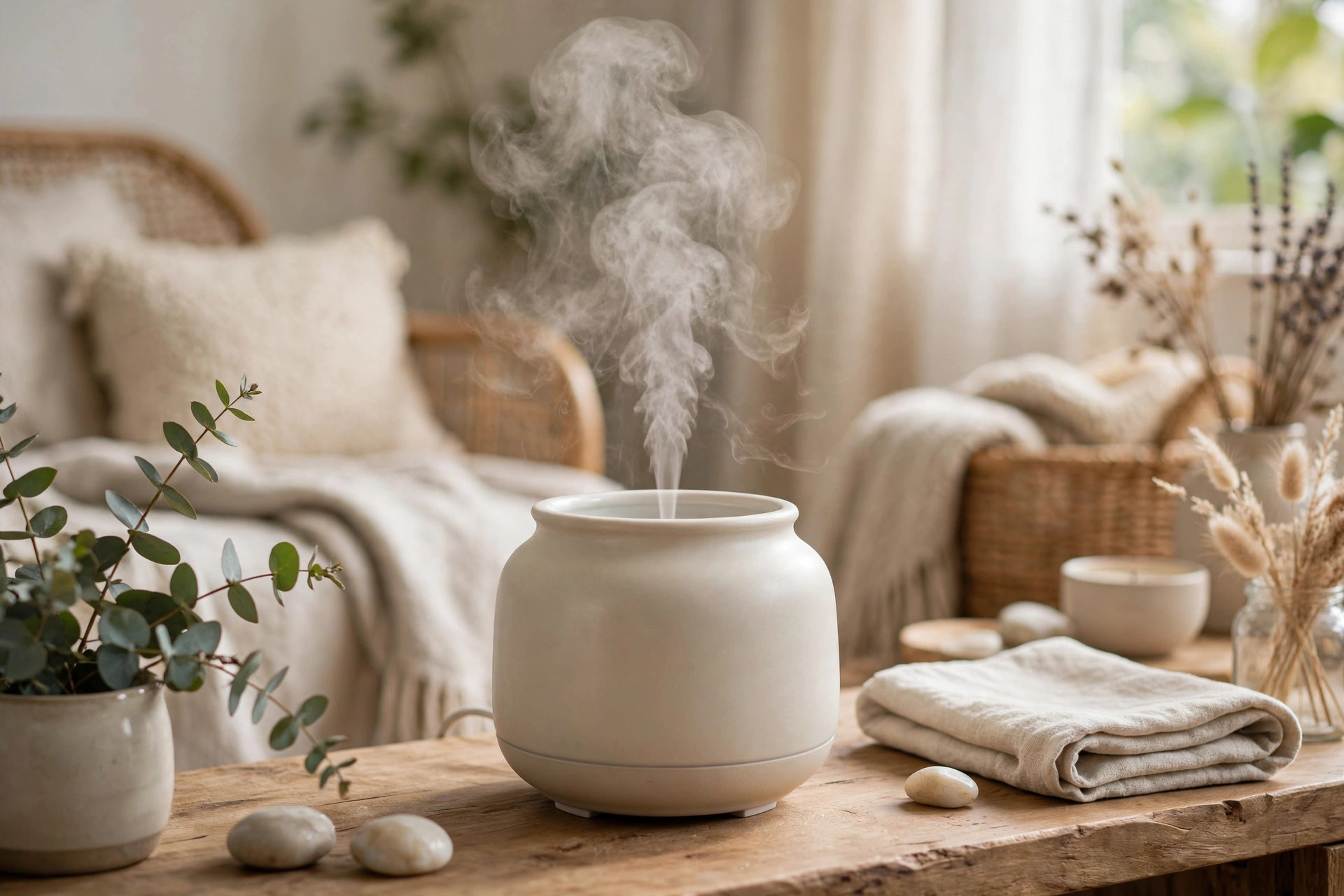
Diffusion is the easiest and safest way to enjoy essential oils — there's no skin contact involved at all. An ultrasonic diffuser uses water and gentle vibration to send a fine scented mist into the air, and most models switch themselves off when the water runs low.
Here's the basic method: fill your diffuser with clean water up to the fill line, add 3–5 drops of essential oil (a single oil or a small blend), and switch it on. Run it for 30–60 minutes at a time rather than all day — your nose adapts to a constant scent anyway, so intermittent use actually works better and uses less oil.
A few beginner blends to try:
- Calm evening: 3 drops lavender + 2 drops eucalyptus
- Fresh morning: 3 drops lemon + 2 drops peppermint
- Cosy afternoon: 2 drops lavender + 2 drops lemon + 1 drop eucalyptus
Place the diffuser on a stable surface away from table edges and electronics, and clean it regularly following the manufacturer's instructions — oily residue builds up over time and affects performance.
How to use essential oils: diluted on skin
Essential oils are far too concentrated to use neat (undiluted) on skin — they can cause irritation or sensitisation, even oils that seem gentle. The safe approach is dilution in a carrier oil: a plain plant oil such as jojoba, sweet almond, fractionated coconut, or even olive oil from the kitchen cupboard.
The standard beginner dilution is 1–2% for everyday adult use — that's roughly 6–12 drops of essential oil per 30 ml (about one ounce) of carrier oil. For a small roller bottle or a palmful of carrier oil for a self-massage, that guideline keeps things comfortably gentle.
Two easy ways to start:
- Pulse-point roller: fill a 10 ml roller bottle with carrier oil, add 3–4 drops of lavender, and apply to wrists or temples when you want a moment of calm.
- Post-shower moisture: add 2–3 drops of your chosen oil to a tablespoon of carrier oil and smooth over arms or legs.
Before using any new oil on your skin, do a patch test: apply a small amount of the diluted oil to your inner forearm and wait 24 hours. If there's redness, itching, or irritation, don't use that oil on your skin.
How to use essential oils: in the bath (and shower)?
A few drops of essential oil in a warm bath is one of life's small luxuries — but never drop them straight into the water. Oil and water don't mix, so undiluted drops float on the surface and can irritate skin on contact.
Instead, mix 5–8 drops into a tablespoon of carrier oil or a spoonful of unscented liquid soap or shower gel first, then swirl that mixture into the running water. Eucalyptus or lavender both work beautifully here, and the warm steam helps carry the aroma.
No bath? Try the shower trick: add 2–3 drops to a washcloth placed on the shower floor, away from the direct stream. The steam does the rest, turning an ordinary shower into something a little more spa-like.
Safety first: the rules that actually matter
Essential oils are natural, but natural doesn't automatically mean harmless — these are highly concentrated substances, and a little respect goes a long way. These are the rules worth memorising:
- Always dilute for skin use. No exceptions for beginners, and no exceptions for "gentle" oils.
- Never ingest essential oils. No drops in water, tea, or food. Ingestion can cause serious harm and should only ever happen under the guidance of a qualified professional.
- Keep oils away from eyes and mucous membranes. If oil gets into your eyes, flush with a carrier oil or milk rather than water, and seek advice if irritation persists.
- Patch test every new oil. Each oil, each time — sensitivities can develop to oils you've used before.
- Be cautious with children. Use much lower dilutions for kids, and some oils aren't suitable for young children at all. Check reputable guidance or ask a professional before use.
- Check before use in pregnancy. If you're pregnant or breastfeeding, talk to your healthcare provider before using essential oils.
- Mind your pets. Cats and dogs are more sensitive than we are — tea tree, eucalyptus, citrus oils, and several other common ones can be harmful to them. Diffuse in ventilated rooms, always let pets leave the room freely, and never apply oils to your pets.
- Store them properly. Keep bottles in their dark amber glass, tightly sealed, away from heat and sunlight. Most oils keep for a year or two; citrus oils are best used within about a year of opening.
Follow these, and you'll sidestep virtually every common beginner mishap.
Building your little collection
Start small: pick two or three oils you genuinely love the smell of, one carrier oil, and a diffuser if you don't have one yet. Learn how each oil behaves, which blends you reach for, and what your household enjoys. You can always add more later — a small collection you actually use beats a big one gathering dust on a shelf.
The real pleasure of essential oils isn't complicated routines or exotic blends. It's the small daily rituals: a calming scent while you read in the evening, a fresh-smelling kitchen, a bath that feels like a reset button after a long day. Start simple, stay safe, and enjoy discovering what works for you.
Frequently Asked Questions
Can I put essential oils directly on my skin?
No — always dilute for skin use, with no exceptions for beginners or for oils described as gentle. Patch test every new oil, each time, since sensitivities can develop to oils you have used before.
Can I swallow essential oils?
Never ingest essential oils — no drops in water, tea, or food. Ingestion can cause serious harm and should only ever happen under the guidance of a qualified professional.
Are essential oils safe around pets and children?
Be cautious with both. Use much lower dilutions for children, and some oils are not suitable for young children at all. Cats and dogs are more sensitive than we are — tea tree, eucalyptus, citrus oils, and several others can be harmful to them — so diffuse in ventilated rooms, always let pets leave the room freely, and never apply oils to your pets.
How should I store essential oils?
Keep bottles in their dark amber glass, tightly sealed, away from heat and sunlight. Most oils keep for a year or two; citrus oils are best used within about a year of opening.
This article is for general information only and isn't medical advice. If you have a health condition, are pregnant, or are unsure about an oil, check with a qualified health professional first.
Ready to start your collection? Browse our essential oils and diffusers at https://www.cherishyourhealth.com/health-beauty-hair/skin-care to find your first favourites.
