
Can't Switch Off at Night? 6 Wind-Down Helpers for Better Sleep
You know the pattern: you're tired all evening, then the moment your head hits the pillow, your brain starts replaying the day and planning tomorrow. For many of us, the problem isn't sleep itself — it's the missing step between a busy day and a quiet night. A wind-down routine gives your body the signal that the day is over, and the right tools make that routine easier to keep. Here are six simple helpers worth trying, what each one actually does, and where their limits are.
1. Weighted Blanket
What it is
A blanket filled with small, evenly distributed weights — usually glass beads or pellets — so it feels noticeably heavier than a normal blanket, like a firm, even hug across your body.
What it helps with
Many people find the steady, gentle pressure calming, and use one to settle more quickly at bedtime. It's a comfort tool: it helps some people feel less restless as they drift off.
Who it suits
Adults who toss and turn, anyone who likes the feeling of being tucked in firmly, and people building a consistent bedtime routine.
Its limits
Choose a weight around a tenth of your body weight — heavier isn't better. Weighted blankets aren't recommended for young children, and anyone with breathing problems or who can't easily move the blanket off themselves should check with a doctor first. Some people also find them too warm in summer.
2. Heat Wrap
What it is
A wraparound pad — electric or microwavable — that delivers gentle warmth to your neck, shoulders, or back while you relax in the evening.
What it helps with
Warmth helps tight, end-of-day muscles relax, and that physical unwinding is part of what tells your body it's safe to slow down. Plenty of people make 15 or 20 minutes with a warm wrap the first step of their wind-down.
Who it suits
Desk workers carrying the day in their shoulders, anyone who gets stiff in the evening, and people who find a warm routine easier to stick to than stretching.
Its limits
Heat is for everyday tightness, not fresh injuries or swelling. Use the lowest comfortable setting, don't fall asleep with an electric wrap switched on unless it has an auto shut-off, and never use one over broken skin.
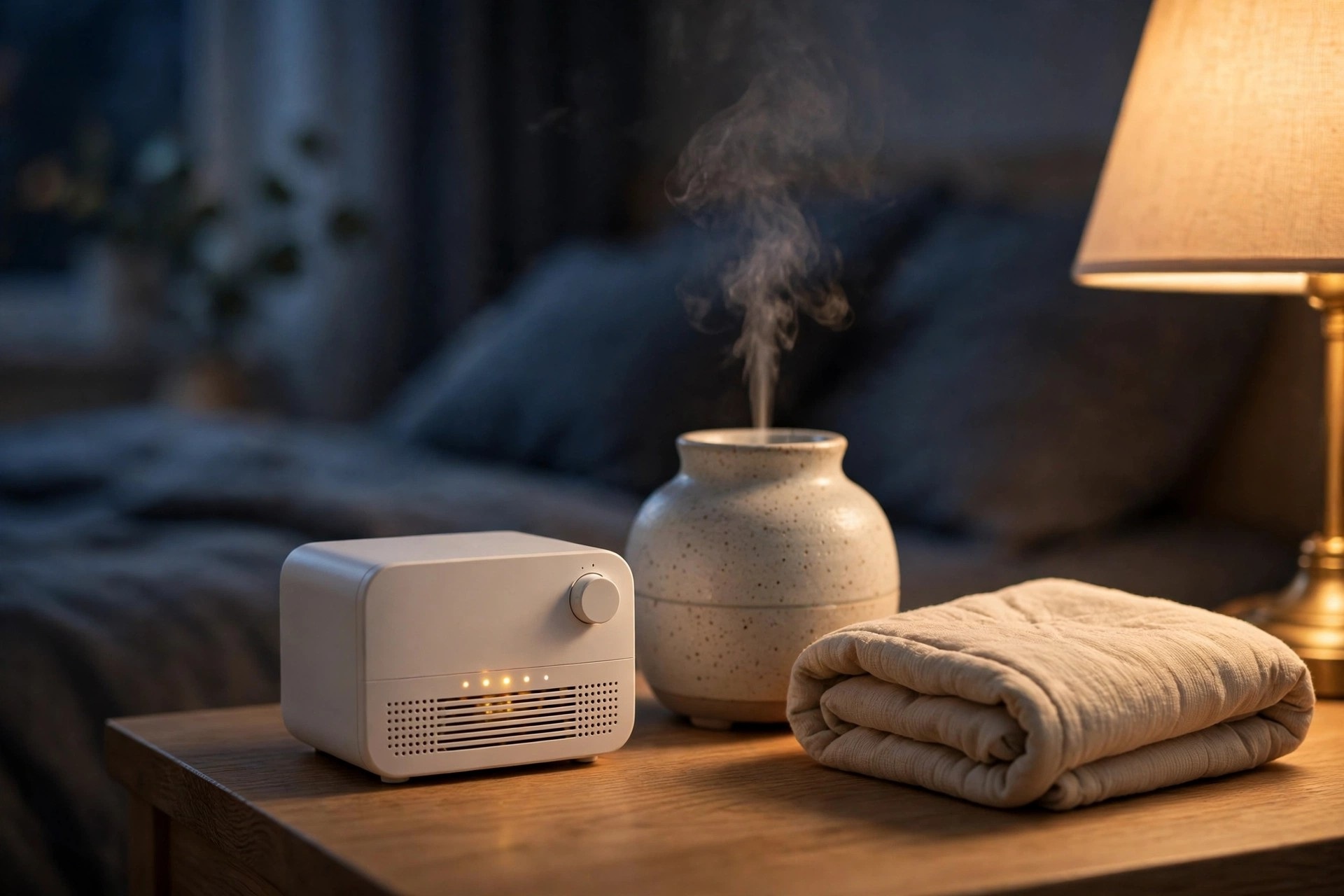
3. Essential Oil Diffuser
What it is
A small device that disperses a fine mist of water and a few drops of essential oil into the air, filling the room with a gentle scent.
What it helps with
It turns scent into a routine cue. Many people find that using the same calming scent — lavender is the classic — at the same time each evening helps mark the shift from "day mode" to "bedtime", as much through habit as through the scent itself.
Who it suits
Anyone building an evening routine, and people who find a pleasant-smelling bedroom easier to relax in.
Its limits
Scents won't treat a sleep disorder, so keep expectations realistic. Keep oils away from pets — some are unsafe for cats and dogs — and use only a few drops, as directed. If a scent gives you a headache, stop using it.
4. White Noise Machine
What it is
A small bedside device that plays a steady, unchanging sound — fan noise, rainfall, or soft static — through the night.
What it helps with
Sudden noises are often what wake us: a car door, a creaking house, a partner coming to bed later. A constant background sound smooths out those peaks, so small disturbances are less likely to pull you out of sleep.
Who it suits
Light sleepers, shift workers sleeping during the day, and anyone whose home or street is noisy at unpredictable times.
Its limits
Keep the volume modest — about the level of a soft shower — rather than loud enough to need raising your voice over. And if you rely on hearing a baby, an alarm, or a smoke detector, position and volume need extra care.
5. Contour Pillow
What it is
A pillow shaped with a dip in the middle and raised edges, designed to cradle your head while supporting the natural curve of your neck.
What it helps with
A pillow that holds your neck in line with your spine can reduce the awkward angles that leave you waking stiff and sore. Back sleepers benefit most from the cradle shape; many contour pillows have a higher and lower edge so side sleepers can find a fit too.
Who it suits
Anyone who wakes with a stiff neck, back sleepers, and people whose current pillow is either flat as a pancake or folded in half to feel supportive.
Its limits
A new pillow takes a week or two to get used to, so don't judge it on one night. And a pillow can't fix a mattress that's sagging or well past its best — if you wake sore everywhere, the mattress is the bigger suspect.
6. Blackout Sleep Mask
What it is
A soft, contoured mask that blocks light completely without pressing on your eyes, held in place with an adjustable strap.
What it helps with
Light is one of the strongest signals telling your brain to stay alert. A mask gives you darkness on demand — useful when your bedroom isn't fully dark, in summer when the sun rises early, or when you sleep at different hours from the rest of the house.
Who it suits
Light-sensitive sleepers, shift workers, frequent travellers, and anyone whose partner reads or watches TV in bed.
Its limits
Fit matters: a mask that presses on your eyelids or lets light leak in at the nose won't do its job. Wash it regularly, and if total darkness makes you uneasy, start by wearing it for short naps to get used to it.
How to Build Your Wind-Down Routine
The tools work best as a sequence, not a shopping list. Pick a finish line — lights out at the same time most nights — and work backwards about 30 to 45 minutes:
- Dim the day down. Lower the lights, put your phone on charge outside the bedroom if you can, and let the screens go dark.
- Start with warmth and scent. Heat wrap on while you read, diffuser running with your usual evening scent.
- Set the room. White noise machine on, weighted blanket ready, mask on the pillow.
- Keep it boringly consistent. The same order, at roughly the same time, is what turns these items into a signal your body learns.
Add one helper at a time and give it a week before judging it. And if you regularly snore loudly, wake gasping, or feel exhausted despite enough hours in bed, skip the gadgets and see a doctor — those can be signs of sleep apnoea, which needs proper assessment, not accessories.
The Bottom Line
Better sleep usually starts before your head reaches the pillow. A short, repeatable wind-down — warmth, a familiar scent, steady sound, darkness, and a bed that supports you — gives your body the cues it's missing after a busy day. Start with the helper that matches your biggest obstacle, keep the routine for a couple of weeks, and build from there.
Frequently Asked Questions
How long should my wind-down routine take?
About 30 to 45 minutes before lights out: dim the lights and put screens away, start with warmth and scent (heat wrap on, diffuser running), set the room (white noise on, weighted blanket ready, mask on the pillow), and keep the same order at roughly the same time each night.
How heavy should a weighted blanket be?
Choose a weight around a tenth of your body weight — heavier is not better. Weighted blankets are not recommended for young children, and anyone with breathing problems or who cannot easily move the blanket off themselves should check with a doctor first.
Will a white noise machine really help me sleep?
It smooths out sudden noises — a car door, a creaking house, a partner coming to bed later — so small disturbances are less likely to pull you out of sleep. Keep the volume modest, about the level of a soft shower.
When is poor sleep something to see a doctor about?
If you regularly snore loudly, wake gasping, or feel exhausted despite enough hours in bed, skip the gadgets and see a doctor — those can be signs of sleep apnoea, which needs proper assessment, not accessories.
This article is for general information only and isn't medical advice. If you're dealing with ongoing insomnia or persistent health concerns, check in with a qualified health professional.
Browse our massage & relaxation collection to start building your wind-down kit.
